5 digital trends reshaping fashion manufacturing in 2026
Fashion manufacturing is evolving beyond equipment and software. New expectations around sustainability, skills development and digital enablement, regulatory compliance and data‑driven culture are redefining what modern operations must look like.
#1 The rise of connected production ecosystems
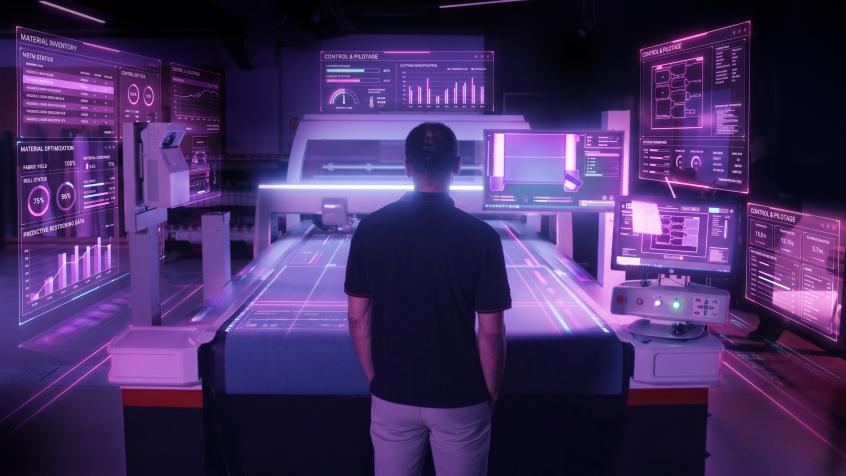
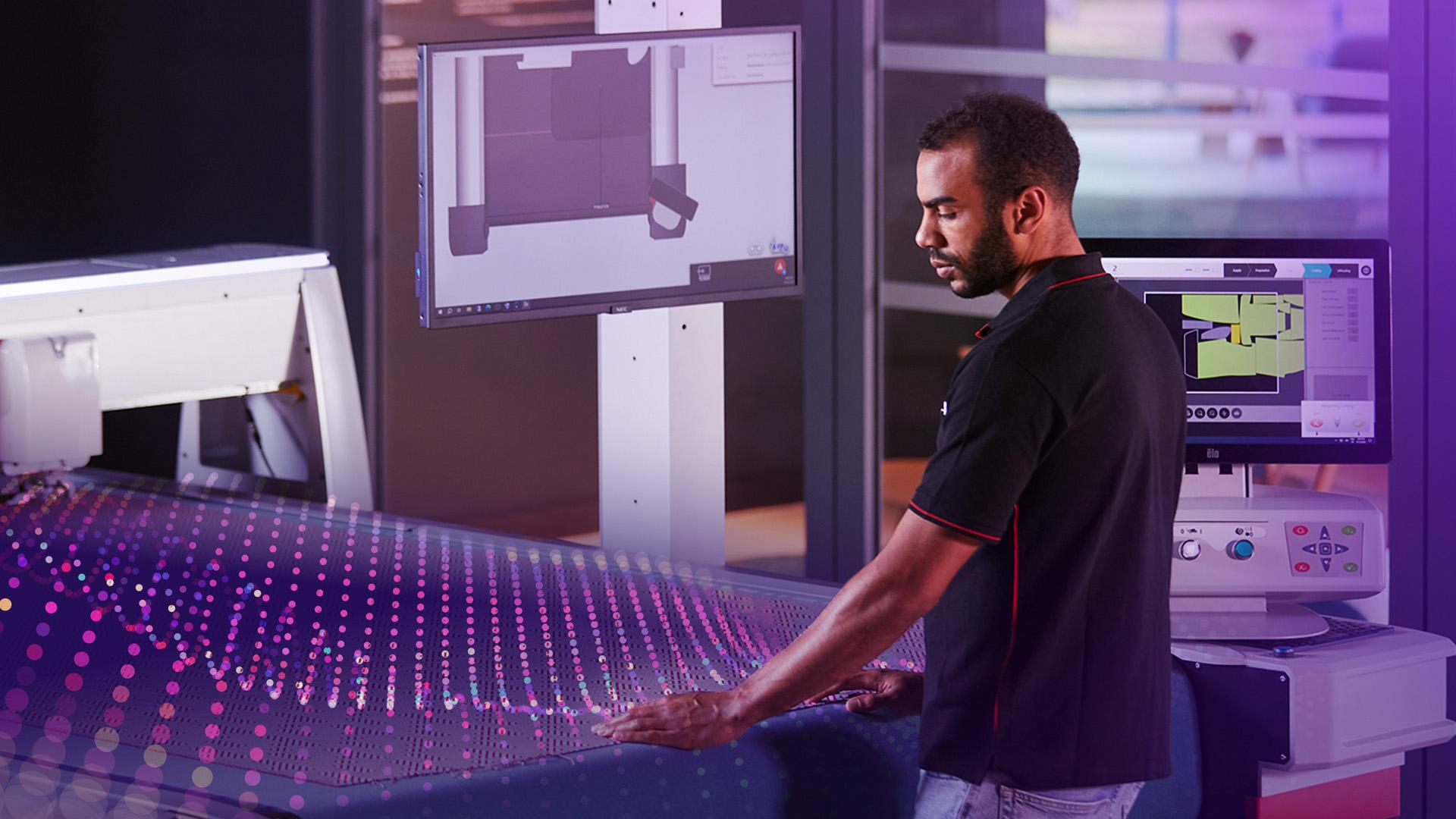
Fashion manufacturers are shifting from isolated production lines to fully connected ecosystems, where data flows between teams, sites and partners.
Unlike traditional automation, this trend focuses on:
- shared data standards across suppliers
- vendor-agnostic equipment connectivity: connects spreaders, plotters, and cutters from different brands to keep jobs flowing end to end
- collaborative platforms enabling faster decision‑making
This ecosystem approach strengthens coordination and reduces friction in production chains increasingly exposed to volatility.
#2 Sustainability reporting becomes operational
Sustainability is no longer a communication topic — it is now embedded into daily operations.
Manufacturers increasingly structure their practices around:
- waste measurement
- energy and resource tracking
- audit‑ready environmental reporting
Climate regulations and brand commitments push factories to adopt traceability and transparency mechanisms that support continuous improvement.
#3 Workforce transformation & digital readiness
The transformation of cutting rooms is accompanied by deep organizational changes.
Teams are evolving toward hybrid roles mixing:
- operational expertise
- digital literacy
- data consolidated
Training programs, upskilling initiatives and user‑centric interfaces support this new competency model, where operators need to manage information as much as machinery.
#4 Data culture becomes a competitive advantage
Companies that treat data as a core asset see measurable performance improvements.
In modern factories, data culture includes:
- shared KPIs
- standardized reporting frameworks
- decision‑making based on real‑time signals rather than intuition
This shift supports faster problem detection, stronger collaboration and more consistent process execution.
#5 Flexible production models as the new norm
Apparel manufacturers face unprecedented variability in order sizes and lead times.
To remain competitive, they develop production models emphasizing:
- short cycles
- rapid switching between product types
- capacity distribution across multiple sites
- modular workflows that adapt to demand patterns
Flexibility is now a structural requirement, not a tactical one.
Discover Lectra's solution for fashion manufacturing
The modernization of fashion manufacturing in 2026 is driven as much by organizational evolution as by technology.
Connectivity, sustainability accountability, workforce transformation and data culture are becoming defining pillars for future‑ready manufacturers.
These forces shape a new operational landscape—one where performance, agility and responsibility are inseparable.
Valia Fashion

Related content