AI’s next frontier: How agentic AI is reshaping fashion
Key takeaways
- AI has reached a turning point, moving beyond standalone generative tools toward agentic AI capable of executing complex, multi-step workflows with greater autonomy.
- Connected, trusted industry data is what turns powerful AI into relevant, actionable intelligence.
- AI can transform the entire fashion value chain, creating value across product creation, manufacturing, traceability and marketing while enabling smarter collaboration between teams throughout the product lifecycle.
- The future is human-directed and AI-enabled, combining human expertise and judgment with AI-powered execution, analysis and orchestration.
The Lectra Observatory: Decoding AI for fashion
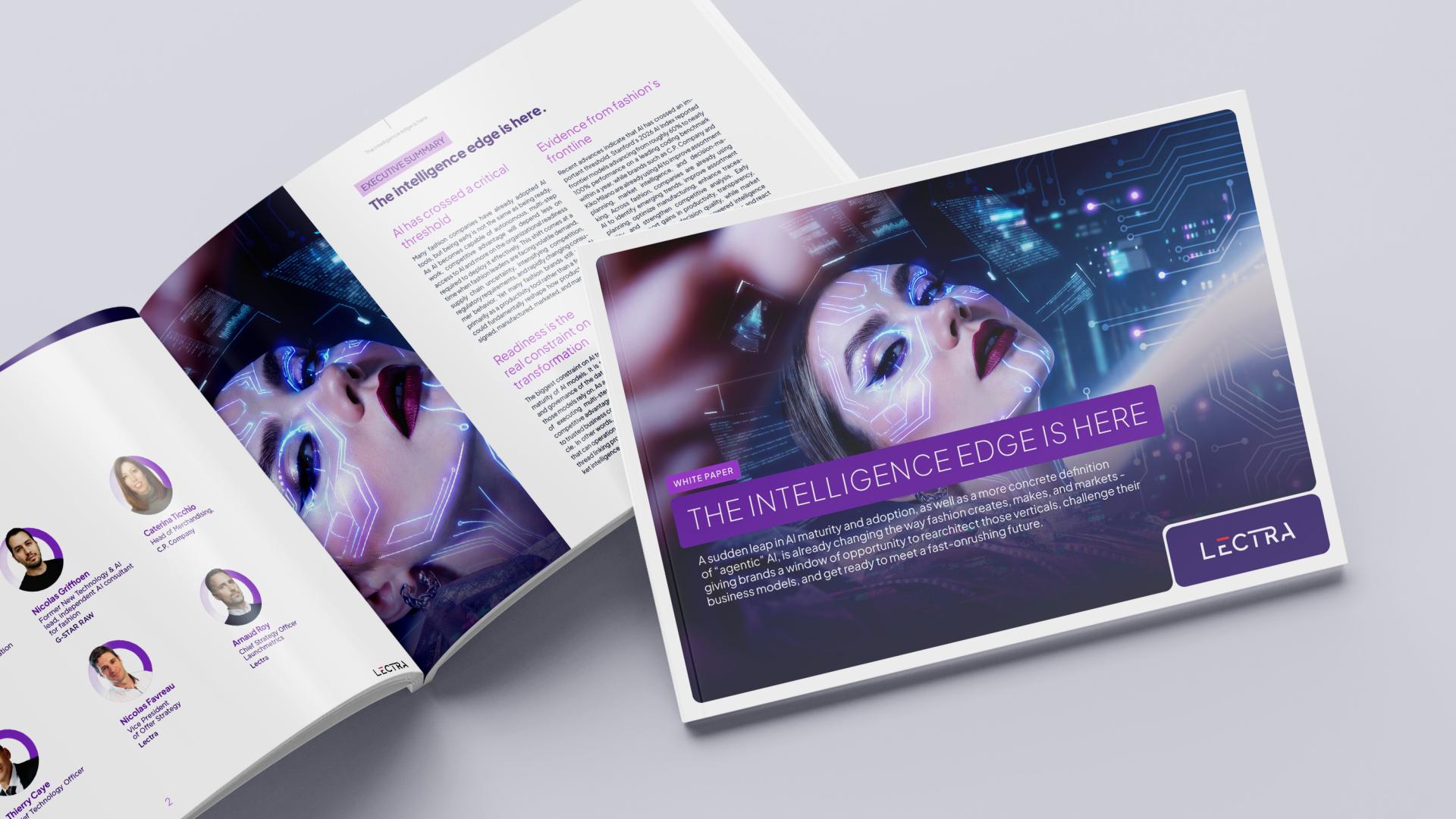
Through its Lectra Observatory, Lectra explores the innovations and transformations reshaping the fashion industry, sharing forward-looking insights designed to contribute to collective industry reflection. Its latest white paper tackles a technology entering a decisive new phase: AI. As generative AI evolves toward increasingly autonomous agentic systems, The Intelligence Edge Is Here explores what this shift could mean for fashion and how companies can prepare for the opportunities ahead.
AI has reached a turning point
Fashion has spent the past few years exploring what generative AI can do. Now, the technology is entering a new phase. Rapid advances in frontier AI models are moving the conversation beyond chatbots and standalone tools toward agentic AI capable of coordinating and executing complex, multi-step workflows.
This shift could transform how fashion teams work. Instead of asking AI to complete isolated tasks, teams can increasingly set objectives and rely on intelligent agents to analyze information, coordinate actions across systems and move work forward, with human experts providing direction and oversight. AI can now take on sophisticated fashion-specific tasks and workflows that until recently were beyond its reach.
For fashion companies, the question is therefore shifting from whether AI will reshape the industry to how quickly they can prepare to capture its potential.
Fashion companies simply cannot afford to underestimate the speed and the scale of this change, because it will impact every brand, and every stage of the product journey.”
Maximilien Abadie, Deputy CEO, Lectra
The real competitive advantage lies in industry data and context
Powerful AI models are only part of the equation. To deliver meaningful fashion outcomes, they need accurate, connected and industry-specific data: market intelligence, product information, historical performance, material and manufacturing data, supply-chain insights and more.
That context is what can transform AI from a generic productivity tool into a trusted decision-making partner. An agent that understands not only the task it has been given but also a brand's products, processes and market can potentially identify opportunities, flag risks and take appropriate action.
This makes AI readiness as much a data challenge as a technology challenge. The companies building an intelligence edge will be those that can connect their systems, break down data silos and give AI access to a reliable source of truth, so that intelligence can flow from market insight and creation to manufacturing, traceability and go-to-market execution, connecting teams and decisions throughout the product lifecycle.
Forecasting, pricing, merchandising, and inventory management are all deeply interconnected, and the strongest downstream outcomes come when the planning and creative stages of the product journey are managed as one decision system rather than as separate disciplines"
Caterina Ticchio of C.P. Company.
AI can create value across the entire fashion value chain
AI can support the entire product journey, helping fashion companies create, manufacture, strengthen traceability and go to market more effectively. Across the value chain, AI can connect people, data and workflows, allowing insights from one stage to improve decisions at another and feed the next cycle of planning and product development.
Create with AI
Manufacture with AI
Market with AI
Traceability with AI
Collaboration with AI
If the objective is for AI models to be able to execute more work over time, then it’s essential for them to be able to understand the end result and the purpose of that work, whether it sits in creative design or procurement, and to be able to trigger events that move the product journey forwards.”
Ben Hanson, Editor-in-Chief, The Interline
The future is human-directed, AI-enabled
More capable AI does not make human expertise obsolete. Instead, the white paper points toward a fundamentally different model of work.
People can focus on defining objectives, setting priorities, applying judgment and protecting the creative and strategic qualities that differentiate their brands. AI agents can increasingly handle execution, analysis and orchestration behind the scenes. The precise balance will differ from one company to another, depending on brand DNA, risk tolerance and business priorities.
As fashion navigates volatile demand, supply-chain uncertainty and rapidly changing consumer behavior, combining human expertise, connected data and trusted AI could give brands the speed and intelligence they need to respond with greater confidence.
This new technology threshold has already unlocked the potential for a fundamentally different model of work for the companies that are ready to embrace it.”
Thierry Caye, Chief Technology Officer, Lectra
A new competitive edge for the fashion industry
The next question is how fashion companies can turn these rapidly advancing capabilities into lasting competitive advantage. The Intelligence Edge Is Here looks beyond isolated applications to explore the bigger opportunity: connecting intelligence, data and workflows across the fashion value chain, from market insight and product creation to manufacturing, traceability and go-to-market performance. Discover how companies can capture this potential while keeping human expertise and judgment at the heart of decision-making.
What you will discover
AI's next chapter is already taking shape. Download the full white paper to explore how AI could reshape creation, manufacturing, traceability and go-to-market performance, and how connecting intelligence, data and teams across the entire fashion value chain could create a new competitive edge.
The Intelligence Edge Is Here
Contributors

Related content