The true cost of waiting: 5 risks of legacy equipment in the automotive cutting room
How postponing an upgrade undermines production continuity, profitability and scalability
5 risks of delaying equipment replacement
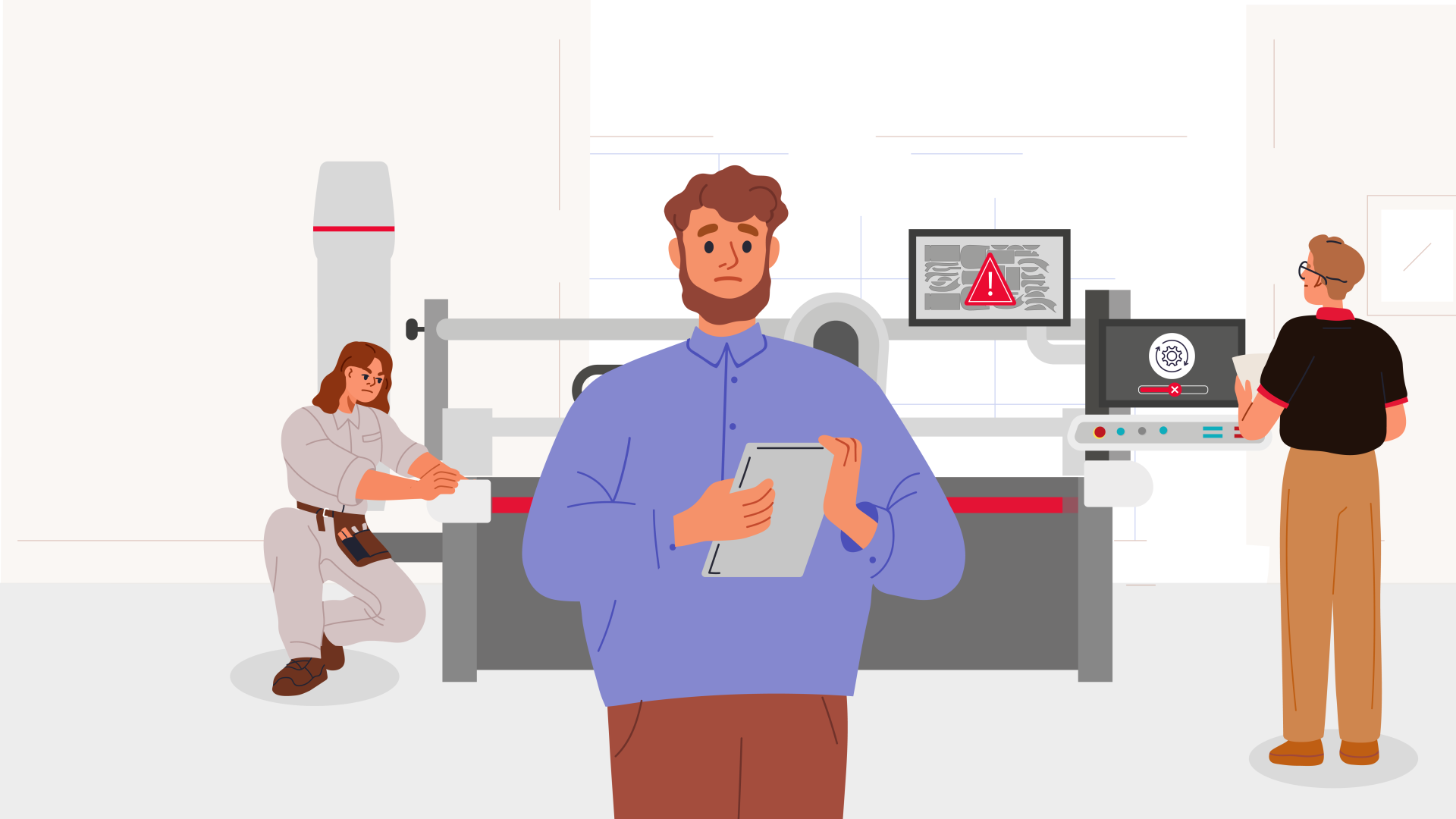
Many automotive interior manufacturers are struggling with a familiar scenario: aging equipment in their cutting room that continues to function, but no longer delivers the reliability, efficiency and scalability they need. This common dilemma remains: should they continue relying on equipment they know well, or embrace next-generation technology and the training that comes with it? While the latter may seem daunting, the long-term benefits of upgrading to modern equipment far outweigh the initial costs.
Continuing to rely on aging equipment can expose your business to five significant challenges:
#1 Production disruption
Aging components, increasing obsolescence and limited support can make breakdowns harder and slower to resolve. As equipment ages, an unexpected failure can therefore become a greater threat to production continuity and customer commitments.
#2 Equipment downtime and late delivery times
Missing predictive-maintenance sensors, slower diagnostics and greater maintenance dependency can disrupt schedules, reduce equipment availability and jeopardize on-time delivery. Repeated delays can ultimately damage your reputation as a reliable supplier.
#3 Increased operating costs
Older platforms may consume more energy, require recurring component replacement and generate higher maintenance effort, increasing total cost of ownership. Over time, these recurring costs can erode profit margins and offset the short-term savings from keeping older equipment in operation.
#4 Lower material quality
Less precise, less consistent cutting and higher buffer requirements can increase waste, rework and downstream sewing or assembly issues. Even small amounts of additional material consumption can add up across production volumes, dampening profitability.
#5 Reduced productivity and capacity
Manual cut-path preparation, interruptions and limited automation can constrain throughput and make it harder to absorb demand fluctuations without adding resources. This can ultimately curb your responsiveness to demand spikes and hinder your ability to scale.
Is it time for you to upgrade your cutting room? Use this cost-benefit checklist
Replacing equipment is a major decision, both financially and operationally. If you answer yes to several of the questions below, it may be time to reassess your equipment and evaluate whether upgrading could deliver greater long-term value.
- Downtime: Is unplanned downtime costing you more in lost production, maintenance and delayed deliveries?
- Maintenance: Are rising maintenance, spare parts and service costs increasing your total cost of ownership?
- Serviceability: Is the growing difficulty of sourcing parts or obtaining technical support increasing your operational risk?
- Material consumption: Could improved cutting accuracy and reduced buffer requirements generate significant material savings over time?
- Productivity: Could faster cut preparation, fewer interruptions and greater automation increase operator productivity?
- Capacity: Could higher equipment availability and throughput help you increase production without adding shifts or resources?
- Delivery performance: Could greater equipment reliability help you meet delivery commitments more consistently and protect customer relationships?
- Visibility and maintenance: Could real-time performance data, predictive maintenance and remote diagnostics help you reduce unplanned downtime and maintenance effort?
- Operating costs: Could newer technology lower energy consumption and other recurring production costs?
- Future growth: Is keeping your current equipment limiting your ability to respond to demand spikes, increase capacity or scale your business?
Strong leaders look beyond the short term
Replacing equipment is never an easy decision. Beyond investment, it can mean retraining teams, adjusting established processes and having to win more buy-in with a clear and convincing business case. All this takes time, resources and careful planning.
But strong leadership is about considering what will create lasting value for the business. It means balancing the challenges of change with the opportunities ahead and making informed decisions with the long term in mind. While remaining with old, still-functioning equipment may feel like an easier choice, changing it can open doors to new opportunities and long-term growth.
By assessing the full picture of your cutting room, from maintenance and material consumption to productivity, capacity and future growth, you can determine when modernization makes sense for your business and move forward with greater confidence.
Discover Vector Automotive, Lectra's solution to empower automotive interiors and seating companies
Vector Automotive
Related content