The engine powering future-ready automotive cutting rooms
In a cutting room squeezed by volatility and rising cost and sustainability pressures, Algopex and Vector iP become the engine of the cutting room—turning real‑time insight and precision cutting into immediate performance gains. They give teams the power to react faster, waste less and keep quality high even when conditions shift.
Automotive suppliers face a new reality
The automotive industry enters 2026 with a new reality: volatility is not fading; it is becoming the norm. Interior suppliers now face rapid program changes, shorter production cycles and fluctuating demand. Supply chains remain unpredictable, with shifting sourcing models and tariff‑exposed components complicating planning.
Competition has intensified as new entrants—especially from China—can bring vehicles from concept to launch in approximately 24 months, compared to 40–50 months for traditional OEMs¹. This speed compresses timelines for suppliers, demanding faster ramp‑ups and stricter control of operational efficiency.
At the same time, sustainability expectations have driven a 35% increase in the use of lightweight and sustainable materials².These new materials increase pressure on efficiency, traceability and material utilization.
For Tier‑1 and Tier‑2 suppliers, the result is clear: the cutting room must evolve into a controlled, data‑enhanced environment where precision, visibility and responsiveness work together to protect margins and support resilience.
Why traditional approaches fall short
Material waste continues to strain margins. The challenge with many traditional cutting systems is that they lack the precision to cut reliably with a very small buffer, forcing manufacturers to maintain wider safety margins than necessary. Yet reducing that buffer by just 1 mm can deliver at least a 1% gain in material efficiency, translating into meaningful cost savings.
Real‑time visibility remains another major constraint Many cutting rooms still rely on manual reporting, delayed KPI updates, or isolated systems. As development cycles shorten and OEM expectations accelerate, relying on yesterday’s data leads to reactive decision making. Teams struggle to identify bottlenecks, track downtime, or quantify the impact of improvements.
Across multi site organizations, performance often varies significantly. Different sites track KPIs differently, interpret data inconsistently or simply lack shared standards. When each site tracks performance differently—or not in real time—meaningful comparison becomes impossible, and best practices fail to spread.
This lack of timely, consistent data also weakens continuous improvement. Teams struggle to prioritize issues when they cannot track the effect of changes in real time, a problem amplified by the fact that hidden inefficiencies can represent 20–40% of operational activity without appearing in traditional KPIs³.
Consequences of using isolated tools
These challenges are amplified when tools and processes operate separately from one another. Equipment that is not connected to performance data cannot signal emerging issues until they become major events. Equipment alone cannot deliver optimal performance without the context provided by real‑time data. Software on its own cannot compensate for inconsistent machine accuracy. Operators cannot sustain improvements without clear guidance.
Optimization requires a true ecosystem where hardware, software and human expertise interact seamlessly.
Hardware + Software + Expertise = The new standard
Forward‑thinking suppliers are shifting to connected, data‑driven cutting rooms. Their goal is to combine automation, real‑time data, and expert‑supported processes into a single, coherent environment. The most advanced cutting rooms integrate three complementary layers:
- High‑precision equipment ensuring accuracy and reliability
- Real‑time KPI monitoring enabling proactive decision‑making
- Expert support guiding adoption, optimization and continuous improvement
Together, these elements create a stable, efficient and easier‑to‑manage production environment that delivers measurable results.
Revealing the hidden dynamics of cutting room performance
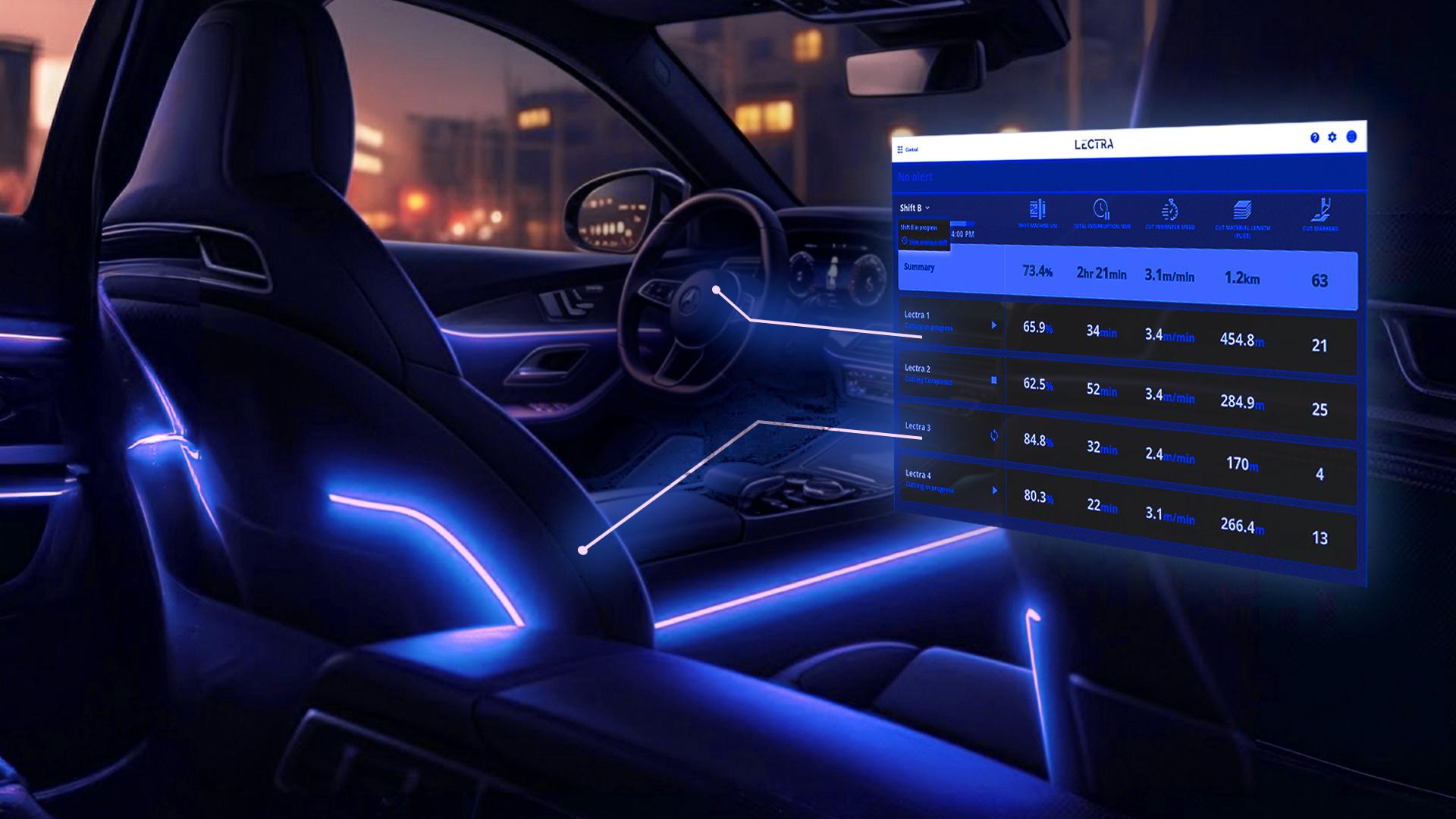
A connected ecosystem makes cutting‑room performance visible in real time. Data flows continuously instead of sitting in spreadsheets or isolated dashboards, allowing teams to spot inefficiencies and performance drift in minutes rather than weeks.
Algopex centralizes data across sites, giving managers instant visibility into equipment utilization, operator productivity, material optimization and process stability. KPIs that were once loosely defined become standardized and actionable. Operators see the impact of their actions immediately. Supervisors gain real‑time alerts when performance dips. Managers finally have a unified foundation for comparing facilities.
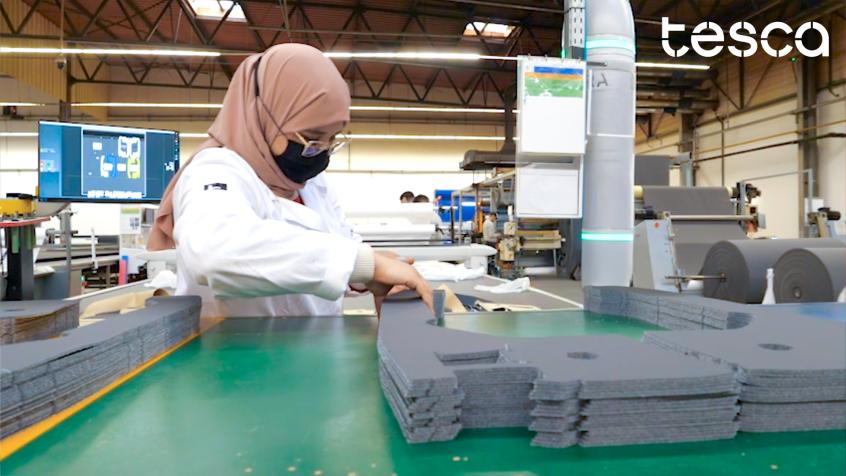
Tesca leverages the real-time visibility it gains from Algopex across sites to accelerate decision-making: “With Algopex we can, in real time, monitor each plant and react if any issues are encountered, limiting stoppages and interruptions. When the KPI is down, an alert can be sent to the supervisor or even to the cutting manager. With Algopex, we can, in that instant, know the performance of each line on each plant simply using a mobile phone.”
Precision cutting: The missing link between insight and performance
Real‑time insights matter only if executed with precision. Without reliable, high‑accuracy equipment, the most sophisticated analytics cannot translate into concrete results. That precision starts with cutting technology capable of consistent, near‑zero‑buffer performance.
Vector Automotive iP bridges the gap between insight and execution. Its ultra‑precise cutting technology directly reduces material consumption, while smart sensors keep production running with minimal downtime through predictive maintenance. By maximizing material yield and ensuring high equipment availability, the Vector Automotive iP delivers immediate gains in efficiency and overall competitiveness.
At Yanfeng’s Mexico plant, precision cutting has become a key lever for cost control: “Since integrating the Vector Automotive iP9, our plant has achieved a significant reduction in material waste, resulting in substantial cost savings thanks to the reduced buffer, a key feature of the Vector Automotive iP9 by Lectra. Lower material waste not only contributes to the plant’s sustainability goals but also aligns with broader cost management initiatives.”
Expertise that sustains performance over time
Technology alone rarely delivers long‑term transformation. Suppliers that achieve lasting gains combine their investments in equipment and software with structured support, training and continuous improvement methodologies.
Lectra’s expert services equip customers with guidance for adoption, change management, benchmarking and process optimization. Teams learn how to interpret equipment data, adjust parameters and ensure improvements stick. This expertise shortens learning curves, accelerates ROI and reduces the risk of performance drift.
Jizhong Group highlights the value: “Lectra’s remote services and after-sales support also make a difference. Their customer success managers visit our facilities regularly to perform assessments and analyses of the complete production environment. This helps us find points in the production cycle that can be improved, allowing equipment to operate at optimum efficiency.”
Tangible impact: Real-world results from automotive suppliers
The benefits of this integrated model are already measurable across global suppliers:
- 3.5% reduction of fabric use
- 2% increase in cutting capacity
- 38 hours of additional uptime annually
- 7% faster cutting time
Together, everything works better
When advanced equipment, real‑time software and expert guidance work together as a single system, they become the engine of the cutting room—driving a more efficient, predictable and high performing operation. Suppliers adopting this integrated approach achieve higher material efficiency, greater uptime, reduced waste and quicker, more informed decisions. Performance stabilizes across sites, operators gain confidence and leaders strengthen their control over costs and capacity. In this connected model, gain clearer insight, tighter control and a more stable foundation for navigating a volatile market.
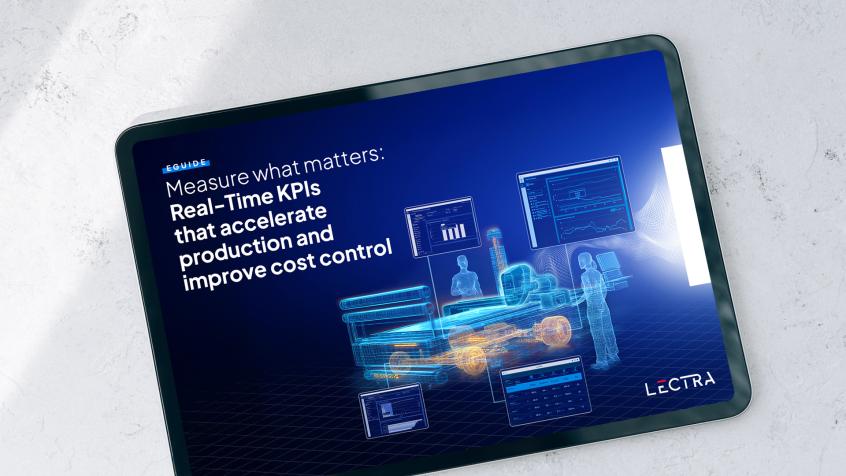
To dive deeper into the metrics, technologies, and best practices shaping the cutting room of the future, download our latest e‑guide. It provides a practical framework to help automotive suppliers boost efficiency, reduce material waste, and strengthen performance across every site.
Download the eguide
Sources
Related content