5 benefits of a virtuous improvement cycle
Automotive interior manufacturers operate under constant pressure to improve efficiency, control costs, and deliver consistently across sites. This article shows how Vector, Algopex, and Lectra’s Customer Success Managers power a virtuous cycle of continuous improvement, turning real-time production data into action, measurement, and repeatable performance gains.
Modernizing continuous improvement
Continuous improvement has always been part of the automotive industry’s DNA. But the environment in which it must be delivered has changed. Programs evolve faster, margins are under constant pressure, and consumer expectations are higher than ever.
Gradual, isolated improvement initiatives are no longer enough. To prioritize the right actions, scale improvements across sites, and secure performance gains over time, teams need real-time visibility into production performance.
By combining Vector Automotive iP’s precision cutting and data generation with Algopex’s real-time performance analytics, manufacturers can turn shop-floor data into clear priorities and measurable impact. Customer Success Managers ensure performance insights translate into business outcomes, with guidance tailored to the company’s challenges and objectives.
#1 Clear priorities for action
One of the biggest challenges in continuous improvement is not identifying problems but rather deciding which actions should come first.
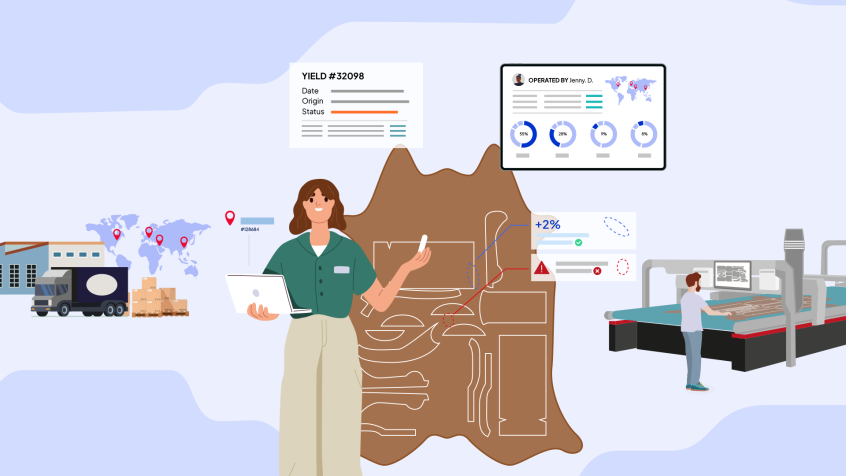
Algopex transforms the data generated by Vector Automotive iP into clear, actionable insights that reflect what is really going on in the cutting room. This makes it easier to identify where the largest losses occur and which actions will have the strongest effect on productivity, cost control, or capacity.
#2 Shared visibility across sites
Continuous improvement becomes more difficult when each plant measures performance differently.
By connecting Vector Automotive iP to Algopex, manufacturers gain a more standardized view of performance across plants, shifts, and programs. This allows them to benchmark results using shared KPIs and identify which sites need to improve. Once those differences are visible, best practices can be transferred more effectively from one location to another.
#3 Engaged and accountable operators
Productivity in the cutting room depends not only on equipment, but also on the people operating it.
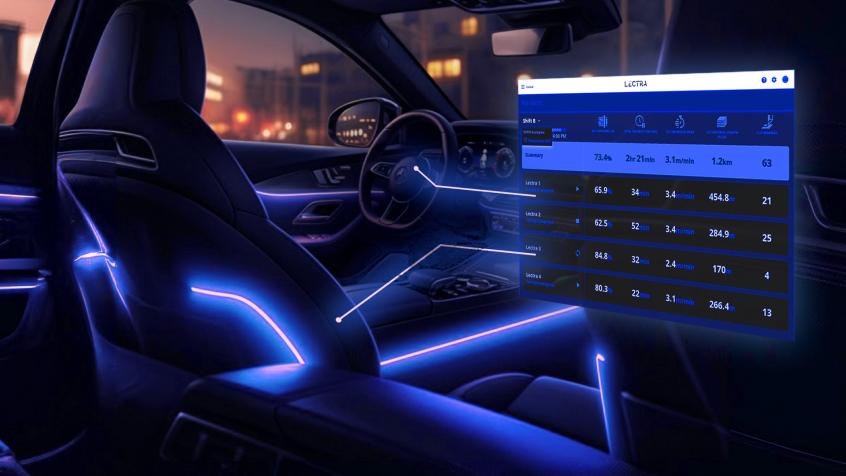
When operators can access real-time performance information through Algopex dashboards linked to Vector Automotive iP, they gain a clearer understanding of how their actions influence results. They can see how interruptions, positioning time, or machine usage affect overall performance.
This transparency supports greater engagement and accountability on the shop floor, helping teams work more consistently and contribute directly to continuous improvement efforts.
#4 Decisions based on facts
Without reliable, real-time indicators, improvement initiatives are often based on assumptions, delayed reports, or incomplete data.
By linking Vector Automotive iP with Algopex, manufacturers can base decisions on performance data that reflects actual shop-floor conditions. Algopex provides the analytical layer to identify losses and trends, while Vector Automotive iP ensures precise, reliable execution.
Together, they enable manufacturers to make data-based decisions, evaluate the effectiveness of improvement actions, and achieve measurable gains in productivity, material consumption, and quality.
#5 Continuous improvement at scale
When product equipment is connected, continuous improvement initiatives are no longer limited to a single plant.
With shared KPIs across all Vector Automotive iP cutting rooms, organizations can deploy collective improvement actions across sites, all at once.
Lectra’s Customer Success Managers support this process by reviewing data regularly, identifying improvement opportunities, and helping customers translate site-level observations into broader performance gains.
Proof in practice: Tesca
Tesca, a global automotive supplier, illustrates how connected production supports continuous improvement. By combining Algopex for real-time KPI visibility with Vector Automotive iP for cutting precision, Tesca gained a unified view of performance across 16 production sites. Their Customer Success Manager helped them benchmark sites, manage peak activity, and drive continuous improvement.
This approach helped the company:
- reduce material consumption by 3.5%,
- increase cutting capacity by 2%, and
- align teams around shared performance objectives
From insight to impact
Sustained continuous improvement depends on reliable data, consistent execution and expert guidance to turn performance insights into lasting results.
With a connected Lectra cutting room, improvement happens in a continuous cycle. Vector Automotive iP generates real-time performance data. Algopex enables teams to use that data to identify bottlenecks and optimize processes. Actions are then implemented which generate new data that feeds the next optimization cycle.
The Customer Success Manager provides ongoing input, helping teams analyze results during regular review meetings, share insights, and translate data into sustained improvement across sites. With nearly 100 experts worldwide, customers benefit from local support that can help them maximize the value of their Lectra solutions and continuously improve their processes.
To go further
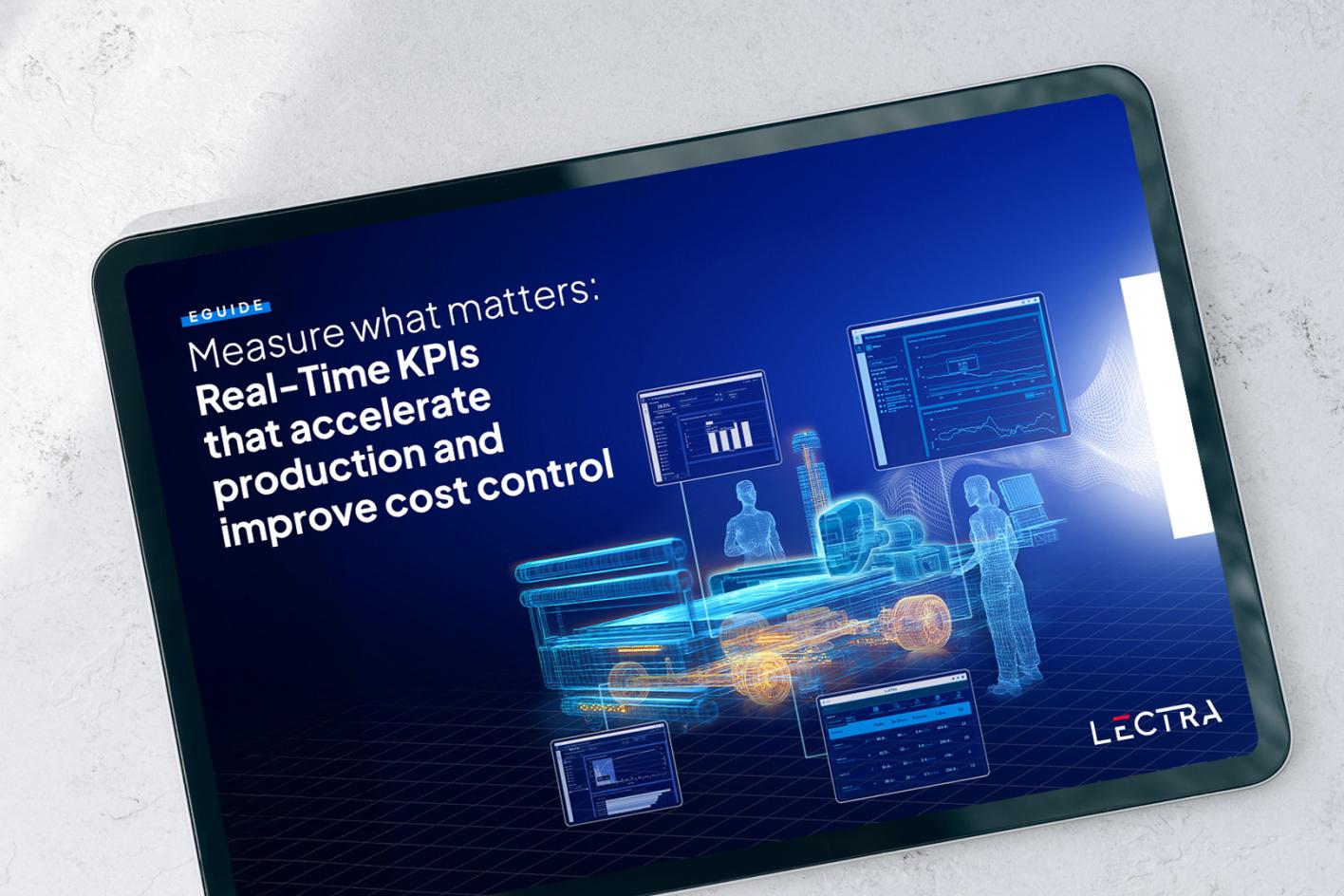
Read the eguide to explore in detail how real-time KPIs, precision cutting, and expert guidance power continuous improvement in the cutting room.
Measure what matters
Related content