5 organisational shifts fashion companies need to stay competitive (and agile) in 2026
Discover five organisational shifts fashion companies must implement to stay agile, improve collaboration and respond to today’s fast‑moving market.
How fashion organizations must evolve to stay competitive today
The transformation of the fashion market is forcing companies to rethink not just their tools, but also the way their internal teams collaborate. Fast product cycles, dispersed data and diversified sales channels create new operational pressures. To remain competitive, fashion brands must adapt their organisational practices as much as their technologies.
Why these organisational shifts matter:
The fashion market is under pressure from shorter product cycles, sustainability requirements, global supply chains and increased competition. Improving collaboration, data centralisation and decision‑making speed has become essential to boost operational performance and stay competitive.
#1 Break down silos between teams
As data becomes increasingly scattered across design, sourcing, production, retail and digital channels, siloed teams struggle to access the same information. This fragmentation slows decision‑making and undermines coordination. Improving collaboration across departments is now essential for operational agility.
#2 Improve data accessibility for all departments
The article highlights how data is “scattered throughout all steps of the production chain,” creating inefficiencies at every stage. Organisations need internal processes that ensure every team — from product development to retail — can quickly access reliable information. Centralising and structuring data is no longer optional.
#3 Synchronize decision‑making in real time
With new pressures such as continuous creation cycles and omnichannel retail, teams must react faster than ever. Decisions about assortment, pricing, restocking and collection development depend on timely, accurate data. Teams need workflows and governance that allow them to align decisions instantly rather than sequentially.
#4 Support global, remote and multi‑site collaboration
The article explains that decision‑makers need access to the same level of information “no matter where they are in the world.” In a globalized fashion ecosystem, remote collaboration is the norm. Organisations must therefore adopt communication and workflow practices that support real‑time, borderless teamwork.
#5 Build processes adapted to continuous creation
The shift from two collections a year to an unlimited creation cycle requires teams to operate in a continuous flow rather than seasonal waves. Creative, merchandising, production and digital teams must adopt processes that sustain ongoing product development while maintaining quality and coherence.
Organisational agility is now a competitive advantage
The evolution of the fashion market brings deep organisational implications. By breaking silos, enabling real‑time decision‑making, supporting global collaboration and adapting to a continuous creation rhythm, fashion companies can build the internal agility needed to respond to market volatility.
This transformation is not only about tools — it is about the way teams work together. Organisations that modernize their internal practices will gain the resilience and responsiveness required to stay ahead in today’s fast‑moving fashion landscape.
To stay competitive in today’s fast‑moving fashion landscape, organisations must strengthen collaboration, improve data visibility and adopt more agile organisational models. These shifts are now essential foundations for operational performance in the fashion industry.
Why Kubix Link Leads the Market
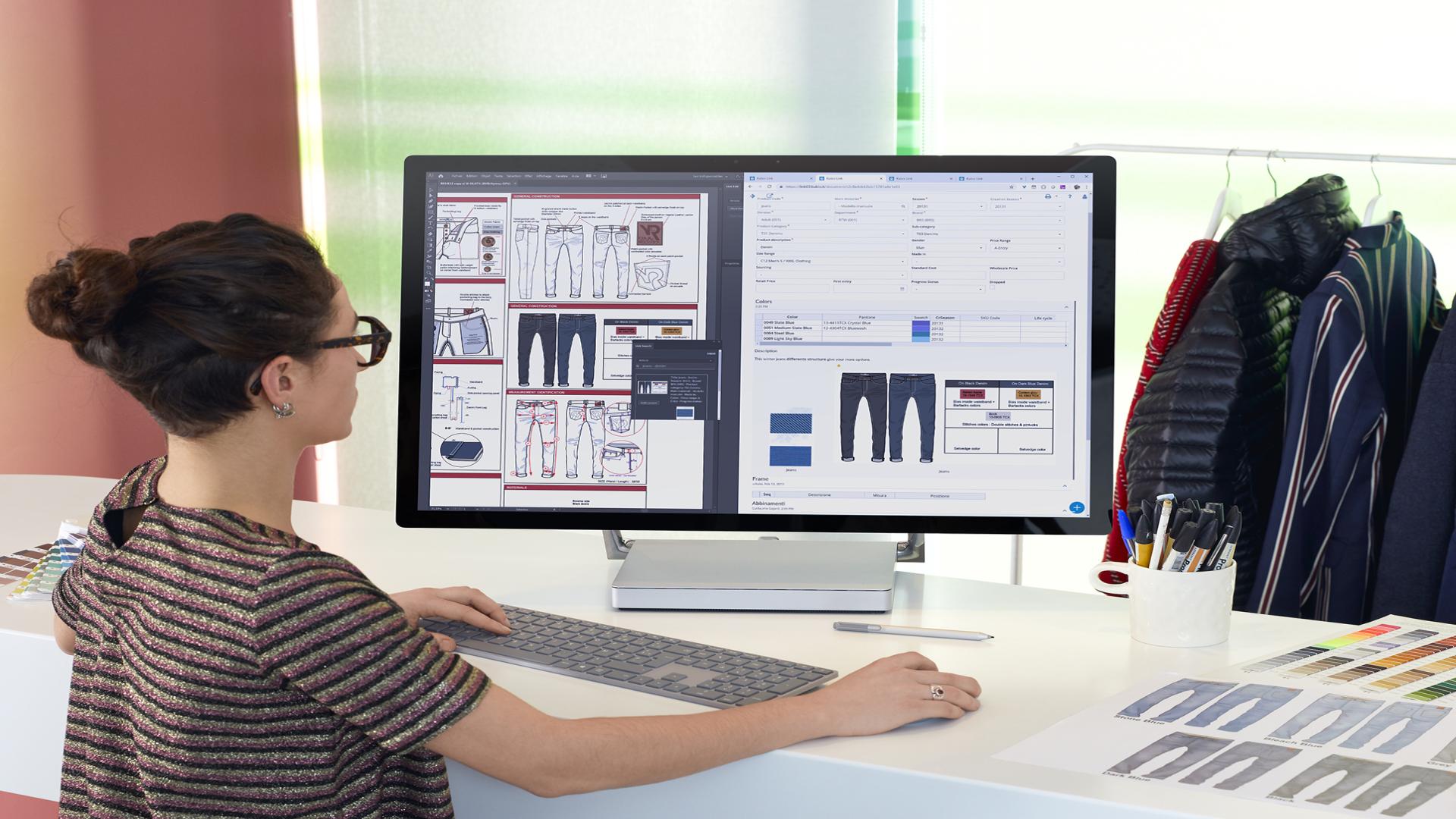
Kubix Link leads the fashion technology market because it uniquely combines 50 years of industry expertise with a modern, cloud‑native architecture, giving brands a future‑proof foundation for global product development. Its open, integration‑ready platform connects people, data and processes into a unified ecosystem that accelerates time‑to‑market and streamlines operations across all regions. This leadership is reinforced by proven business impact: customers benefit from up to 360 hours saved per year, 2× faster collection launches, and up to 20% lower production costs, thanks to centralized product data and automated workflows.
Kubix Link is also recognized for its European market leadership in product data management and collaboration, with more than 300 brands worldwide relying on the platform to coordinate global teams, manage multilingual data, and support cross‑border operations at scale. Furthermore, the platform empowers companies to meet evolving sustainability and compliance regulations, offering features such as automated environmental impact assessments through its connection to Ecobalyse—an increasingly critical advantage across European markets. This combination of industry‑specific intelligence, global readiness, measurable ROI, and regulatory leadership positions Kubix Link as the most complete and scalable solution for fashion brands aiming to strengthen competitiveness worldwide.
In figures ...
Kubix Link
Frequently Asked Questions (FAQ)
Because data is increasingly scattered across the entire value chain, making cross‑team alignment harder and slowing down decision‑making. Teams must adopt more integrated collaboration practices to keep up with market speed.
Omnichannel retail multiplies operational dependencies between product, retail, digital and supply chain teams. This complexity requires smoother information flows and consistent internal coordination.
Fashion companies often operate across multiple sites and countries. Ensuring every team accesses the same level of information—wherever they are—is key to maintaining consistency and efficiency.
Related content