China’s New Energy Vehicle industry and its global expansion
China’s New Energy Vehicle (NEV) industry has rapidly become the driving force behind the global transition toward sustainable mobility. Backed by strong market growth, technological innovation and a highly competitive industrial ecosystem, Chinese manufacturers and suppliers are reshaping the automotive landscape.
This eguide explores the key trends, major challenges and strategic opportunities behind this transformation, and what they mean for companies looking to scale globally.
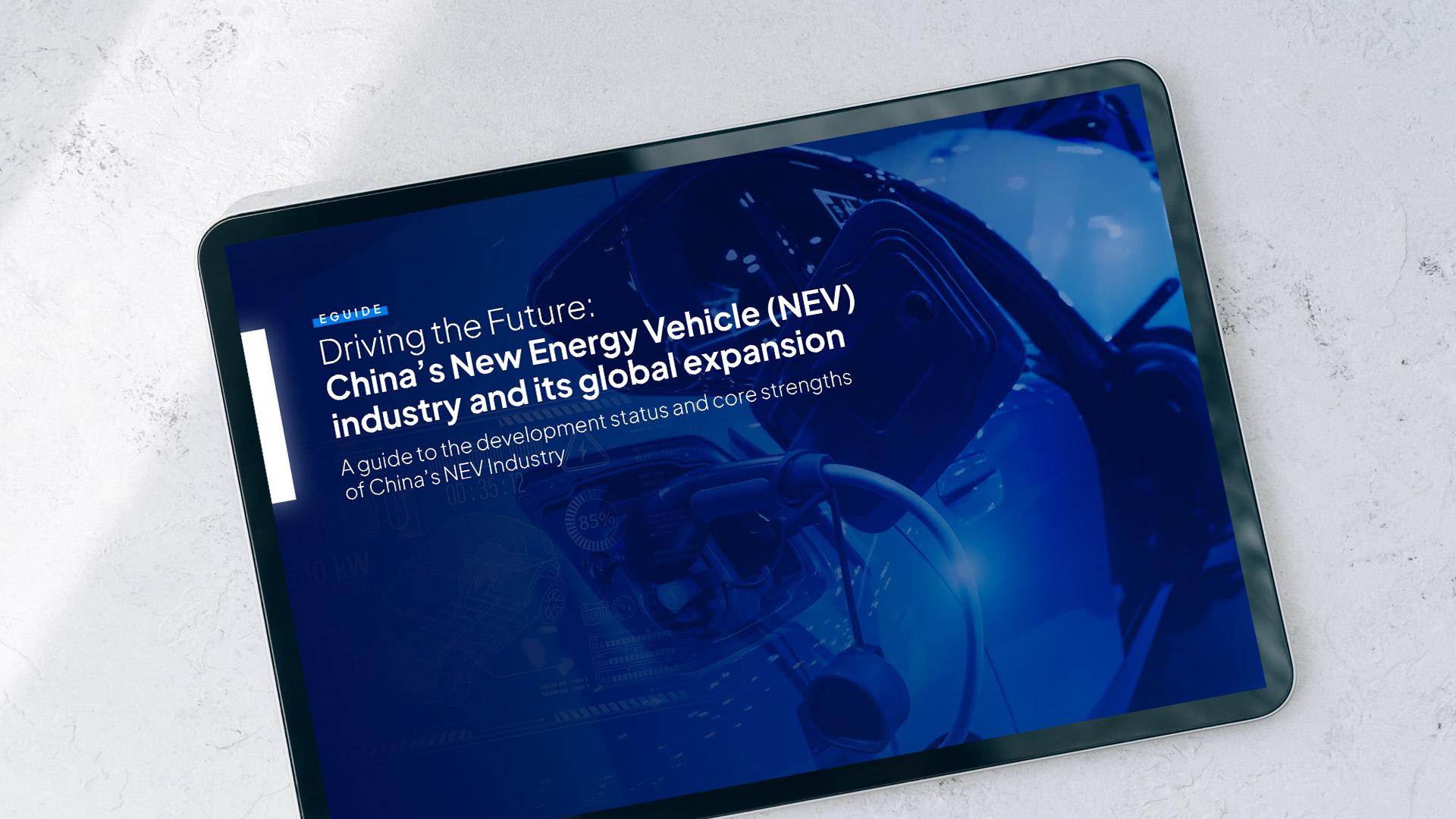
What is the NEV industry and why it matters now
New Energy Vehicles (NEVs) refer to vehicles powered fully or partially by electricity. They include several key categories:
- Battery electric vehicles (BEV)
- Plug-in hybrid electric vehicles (PHEV)
- Fuel cell vehicles
As governments and industries accelerate their transition toward low-carbon mobility, the NEV sector has become a global strategic priority, supported by climate policies and electrification targets worldwide (International Energy Agency).
China now dominates this transformation at scale, capturing over 60% of global market share and reaching around 68% in 2025, supported by a fully integrated industrial ecosystem (China Association of Automobile Manufacturers – CAAM). This momentum is not only redefining mobility in China, but also reshaping global competition and supply chain dynamics.
Unmatched growth driving global leadership
China’s NEV market continues to post record-breaking growth, with approximately 16.5 million units sold in 2025, representing a year-on-year increase of over 28%, while internal combustion engine vehicle sales declined (CAAM).
Exports are also accelerating, reaching more than 7 million vehicles, reflecting the industry’s growing international footprint (China Customs / CAAM).
This expansion is driven by a combination of structural factors:
- Long-term government support and incentives, including tax exemptions and infrastructure investment (State Council of China)
- Strong and evolving domestic demand
- Rapid innovation in connected and intelligent vehicles
As a result, the industry is shifting toward a model where software, data and user experience are becoming central differentiators.
A powerful ecosystem built on innovation and scale
One of China’s key strengths lies in its end-to-end industrial ecosystem, which integrates production, supply chains and advanced technologies within a highly competitive environment.
Innovation is particularly strong in areas such as smart cockpits, advanced driver-assistance systems (ADAS) and software-defined vehicles, supported by strong R&D investment and industrial coordination (Ministry of Industry and Information Technology – MIIT).
Combined with vertical integration strategies, this enables companies to control costs while accelerating time to market. At the same time, collaboration between domestic and international suppliers strengthens the ecosystem and supports continuous technological progress.
Key challenges slowing down performance and expansion
Despite strong growth, the NEV industry faces significant operational and strategic challenges that impact both domestic performance and international expansion.
The most critical challenges include:
- Intensifying competition and pressure on margins
- Increasing product complexity and customization requirements
- Supply chain disruptions and raw material cost volatility
- Trade barriers such as carbon regulations and localization constraints (e.g. EU CBAM, U.S. IRA)
These constraints make it more difficult for companies to scale efficiently and highlight the need for more agile and resilient operating models (World Bank; OECD trade analyses).
How manufacturers can scale successfully worldwide
To sustain growth and compete globally, NEV manufacturers must transform their operating models and rethink how they scale.
This transformation typically focuses on three priorities:
- Building agile and flexible manufacturing systems
- Improving end-to-end data visibility
- Standardizing processes to ensure consistent performance
Beyond products, companies are increasingly exporting industrial capabilities and operational frameworks, enabling them to replicate success across regions while adapting to local regulatory and market constraints (McKinsey automotive insights).
The role of digitalization in next-generation manufacturing
In this context, digital transformation becomes a major performance driver. Technologies such as AI, cloud computing and industrial IoT enable manufacturers to move toward fully connected and data-driven production environments (World Economic Forum).
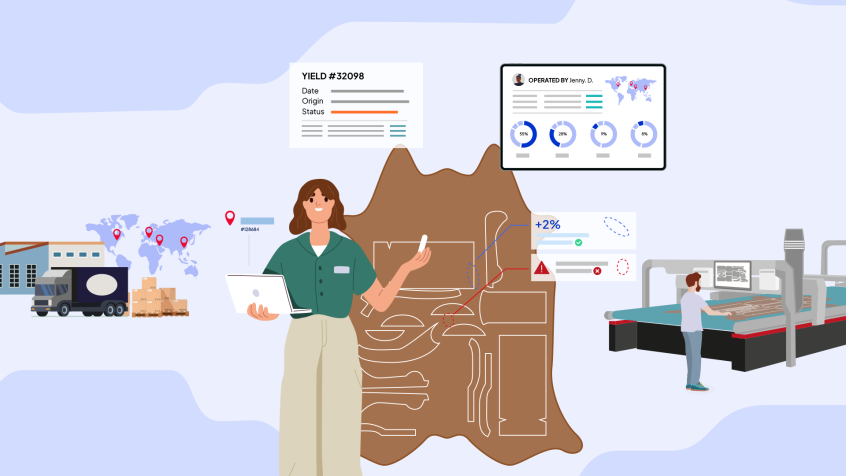
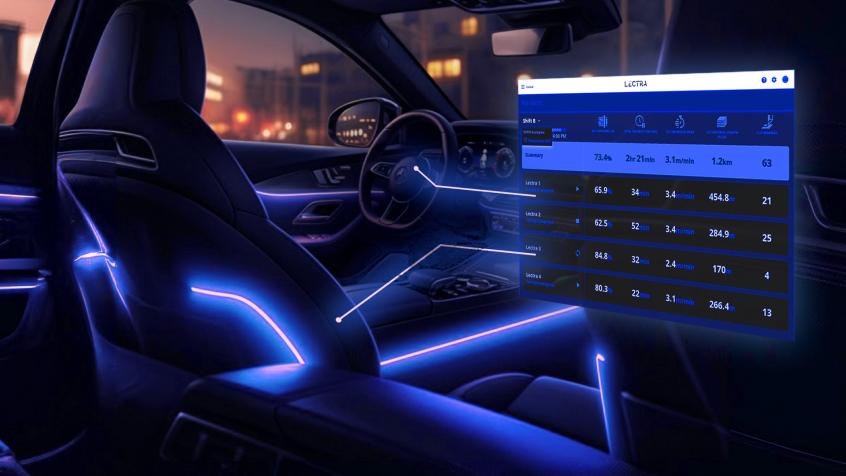
Solutions like Automotive Cutting Room 4.0 illustrate this evolution by enabling:
- Real-time monitoring of production performance
- Improved material efficiency and waste reduction
- Standardization across production sites
These capabilities help companies build more scalable, resilient and efficient operations, which are essential for global expansion.
From manufacturing exports to global leadership
The future of China’s NEV industry will depend on its ability to build globally competitive and sustainable ecosystems. Companies must move beyond a product-centric approach and adopt a broader strategy combining innovation, operational excellence and partnerships.
This shift enables organizations to export not only vehicles, but also:
- Technologies and industrial expertise
- Operational standards
- Sustainable practices
By strengthening these capabilities, Chinese players can position themselves as long-term leaders in next-generation mobility, aligned with global decarbonization and industrial transformation trends (IEA; WEF).
What you’ll learn in this eguide
Want to understand how China’s NEV industry is transforming the global automotive market and what it means for your business?
Download the full eguide to access:
- Market data and key figures
- Strategic insights
- Actionable recommendations for global expansion
Key figures at a glance
This content is based on industry data and insights from leading international organizations and market authorities:
- China Association of Automobile Manufacturers (CAAM) – Industry production, sales and export data for New Energy Vehicles
https://www.caam.org.cn - International Energy Agency (IEA) – Global EV outlook, electrification trends and policy analysis
https://www.iea.org/reports/global-ev-outlook - Ministry of Industry and Information Technology (MIIT), China – Industrial policies and technology development roadmap
https://www.miit.gov.cn - State Council of the People’s Republic of China – National policies supporting NEV adoption and infrastructure development
https://english.www.gov.cn - World Economic Forum (WEF) – Digital transformation, Industry 4.0 and advanced manufacturing insights
https://www.weforum.org - OECD & World Bank – Trade environment, global supply chains and regulatory challenges
https://www.oecd.org
https://www.worldbank.org - McKinsey & Company – Automotive industry analysis and global expansion strategies
https://www.mckinsey.com/industries/automotive-and-assembly
Related content