Why inconsistent performance across production sites puts margins at risk
Consistent performance across production sites starts with consistent measurement. Learn how real-time KPIs help automotive manufacturers benchmark results, identify best practices, and scale improvements throughout their production networks.

Build a common performance foundation across your production network
For automotive manufacturers operating multiple production sites, achieving consistent performance remains a significant challenge. As margins tighten, costs fluctuate, and customer expectations continue to rise, production networks must be able to balance workloads, respond quickly to changing requirements, and maintain high levels of productivity, quality, and delivery performance.
Yet many organizations still lack a comparable view of performance across sites. When machine utilization, productivity, material consumption, or other key metrics are measured differently from one facility to another, comparisons become unreliable. As a result, it becomes difficult to identify best practices, prioritize support, and determine which improvements should be scaled.
To improve performance across the network, manufacturers need a common framework built on standardized, comparable, real-time data. Only then can they benchmark sites effectively, allocate resources with confidence, and drive consistent execution across facilities.
Why standardization must come before optimization
Before manufacturers can improve performance across multiple sites, they must first standardize how performance is measured. Creating a common language for operational performance requires:
- Standardized KPI definitions
- Reliable data collection
- Shared dashboards
When every facility measures results in the same way, benchmarking becomes meaningful, comparisons become more reliable, and decision-making becomes more objective.
Real-time visibility strengthens this foundation by providing continuous insight into performance rather than relying solely on periodic reports. Organizations can identify issues sooner, respond more quickly, and measure the impact of improvement initiatives more effectively. Most importantly, standardized, comparable data helps manufacturers understand not only which sites perform best, but also the operational practices that drive their success.
Turning benchmarking into operational advantage
Once performance data becomes comparable, benchmarking becomes a powerful management tool. Manufacturers can identify performance gaps, distinguish genuine best practices from local assumptions, establish realistic improvement targets, and prioritize support and investment where it will have the greatest impact.
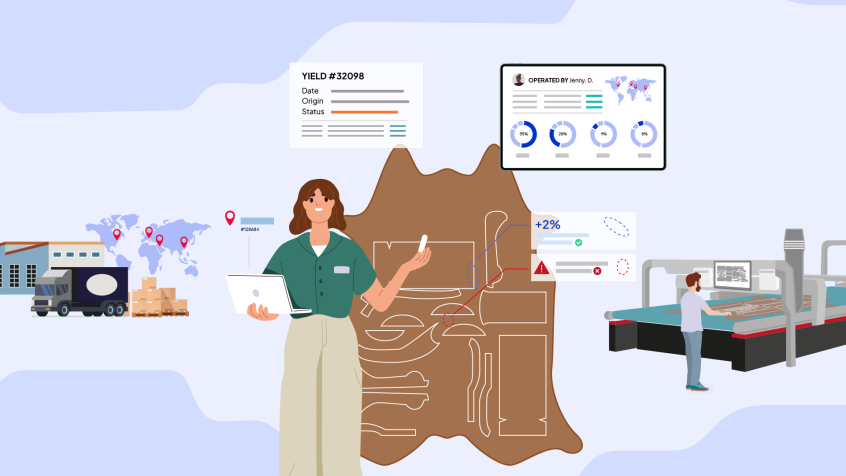
Benchmarking also enables organizations to share and scale successful practices across facilities. Comparable real-time data helps validate improvements, measure their impact, and determine whether they can be adapted to other cutting rooms. What works in one facility can become a proven model for others, helping manufacturers achieve greater consistency in productivity, material utilization, and operational performance across the network.
The Engine of the Cutting Room
Visibility alone does not improve performance. Manufacturers must also be able to act on what the data reveals. This is where Algopex and Vector Automotive iP create value.
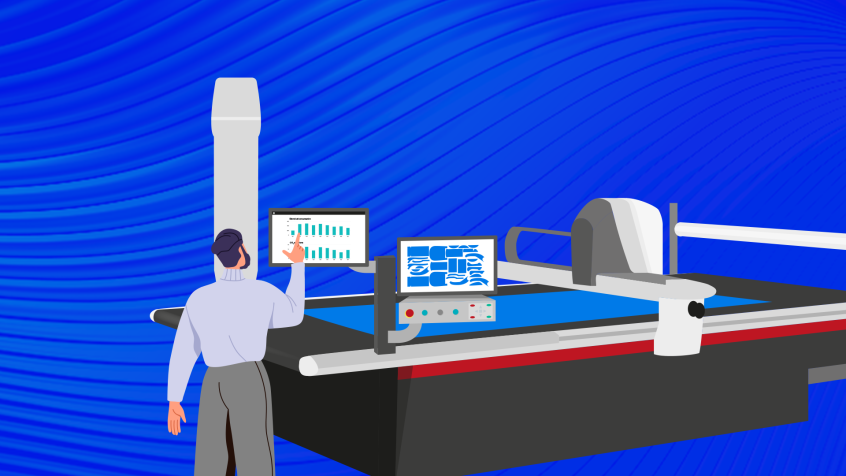
Algopex enables manufacturers to benchmark performance across sites, identify best practices, and prioritize improvement opportunities using standardized, real-time KPIs. Vector Automotive iP helps turn those insights into measurable gains through higher productivity, lower material consumption, and more consistent cutting performance.
Together, they form the Engine of the Cutting Room, connecting visibility with execution to help manufacturers replicate successful practices, standardize improvements, and drive consistent performance across their production networks. Tesca, for example, uses Algopex to monitor 16 production sites in real time and achieved a 3.5% reduction in raw material consumption and a 2% increase in cutting capacity.
Building a global operational cockpit
For COOs, the challenge is no longer simply improving individual cutting rooms. It is creating an organization capable of delivering consistent results across every production site.
Without comparable data, organizations cannot confidently prioritize investments, scale best practices, or protect margins. Shared KPIs and cross-site visibility provide the foundation for a global operational cockpit, enabling manufacturers to monitor, benchmark, and steer performance across their production networks.
By combining the real-time visibility of Algopex with the execution power of Vector Automotive iP, manufacturers can establish a common performance foundation for productivity, quality, cost control, and operational consistency. Together, they form the Engine of the Cutting Room, helping organizations turn local improvements into consistent, scalable performance across the entire production network.
Related content