Why is continuous improvement no longer enough to maintain manufacturing performance?
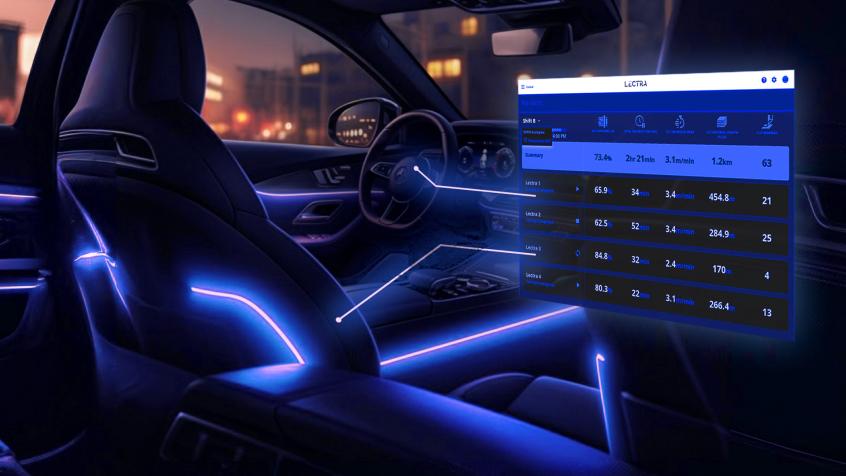
Continuous improvement remains essential, but manufacturers must also be able to prioritize investments, measure business impact, and replicate successful practices across increasingly complex multi-site operations. These capabilities depend on timely, standardized performance data and real-time visibility.
Growing manufacturing complexity requires better visibility
Automotive interior manufacturers are facing growing production complexity, rising material costs, cost volatility, margin pressure, and increasing expectations for operational agility. Maintaining manufacturing performance in this environment requires leaders to make faster, better-informed decisions across the production network.
Manufacturing leaders need visibility into performance gaps, confidence that resources are focused on the highest-value opportunities, and the ability to scale proven improvements across facilities. Without a clear and consistent view of operational performance, organizations risk slower decision-making, missed improvement opportunities, and reduced operational efficiency.
Real-time visibility therefore becomes a critical foundation for sustaining manufacturing performance and protecting profitability.
Why is it difficult to scale continuous improvement across multiple production sites
Continuous improvement initiatives often begin locally, with individual teams addressing specific operational challenges or pursuing performance gains within a single facility. While these initiatives can deliver meaningful results, extending those results across a broader production network is rarely straightforward.
Differences in processes, reporting methods, performance measurements, and operational priorities can make it difficult to compare results between sites and determine whether an improvement can be successfully replicated elsewhere. As a result, practices that improve performance in one facility often take longer to evaluate, adapt, and deploy across the organization.
Common challenges include:
- Performance measured differently from one facility to another
- Limited visibility into operational variations across sites
- Difficulty assessing the business impact of improvement initiatives
- Inconsistent implementation of best practices
- Delayed identification of material waste and productivity losses
- Limited ability to respond quickly to changing production requirements
As complexity increases, continuous improvement requires a stronger foundation. Visibility has become the starting point.
How limited performance visibility slows operational improvement
To scale continuous improvement effectively, manufacturers first need a clear and consistent understanding of performance across their production network. Yet critical performance information often remains fragmented across sites, systems, and teams.
Different facilities may collect data using different methods, rely on separate reporting processes, or review performance at different intervals. Without a standardized view of operations, leaders lack a common understanding of what is happening across the organization and where action is needed most.
As a result, decision-makers often spend valuable time reconciling information rather than addressing performance issues. Delays in identifying inefficiencies, material waste, or productivity losses can slow improvement efforts, while inconsistent reporting makes it more difficult to evaluate results and prioritize resources effectively.
Expanding production networks and increasingly unpredictable market conditions only amplify these challenges. When information remains disconnected, organizations struggle to respond quickly, improve consistently, and sustain performance over time.
How real-time KPIs improve profitability and multi-site performance
Leading automotive manufacturers are strengthening continuous improvement efforts by establishing a common performance framework supported by standardized, real-time KPIs. This enables leaders to evaluate performance consistently across sites and turn operational data into actionable business insights.
With reliable performance information available across the production network, decision-makers can identify opportunities faster, respond to issues sooner, and make more informed decisions.
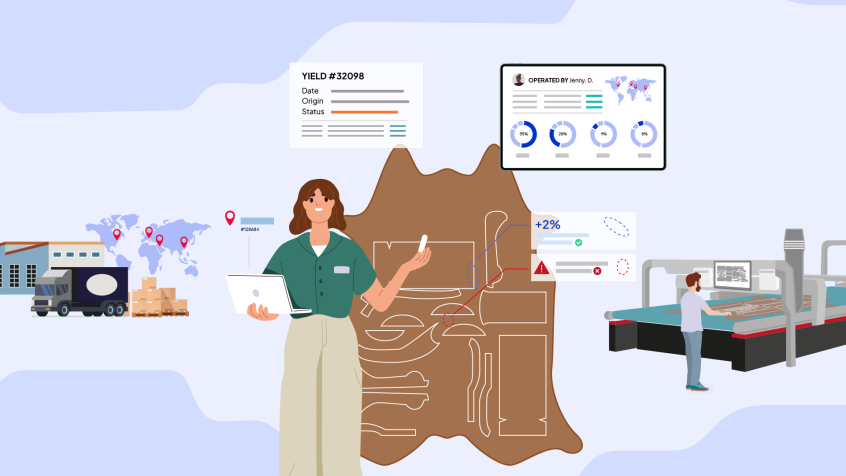
For multi-site organizations, real-time visibility creates the foundation for continuous improvement at scale. Manufacturers can detect unexpected equipment performance issues before they lead to costly downtime, identify variations in material consumption between sites that may be increasing waste and eroding margins, and compare operational performance across facilities to understand why some sites outperform others and replicate successful practices more quickly.
Tesca's success illustrates how these capabilities translate into measurable operational improvements. Using real-time performance monitoring and standardized KPIs, the company benchmarked performance across its global production network, uncovering underperforming equipment, improving operator practices, and optimizing machine settings. These initiatives contributed to a 3.5% reduction in raw material consumption and a 2% increase in cutting capacity.
A real-time performance management approach helps organizations:
- Benchmark performance consistently across production sites
- Identify inefficiencies before they significantly impact profitability
- Prioritize investments based on measurable business value
- Improve responsiveness to changing production demands
- Replicate successful operational practices faster
- Align continuous improvement initiatives with business performance objectives
Standardized visibility makes continuous improvement easier to evaluate, expand, and sustain across the production network.
Turning operational insights into measurable performance gains
Real-time visibility delivers value only when organizations can act on the insights it provides. That's why leading manufacturers are combining intelligent performance management with high-performance execution.
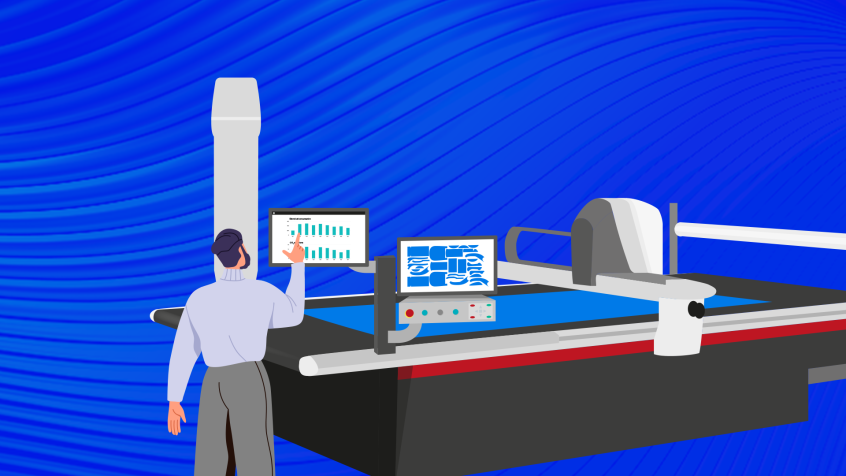
Together, Algopex and Vector Automotive iP form The Engine of the Cutting Room, connecting operational insight with production execution to help manufacturers improve agility, efficiency, productivity, and output quality.
- Real-Time Performance Intelligence
Algopex transforms operational data into actionable KPI visibility, helping leaders understand performance drivers, evaluate improvement opportunities, and make more informed decisions. - A Global Operational Cockpit
Standardized, real-time KPIs provide a unified view of performance across facilities, helping manufacturers benchmark sites, prioritize improvements, control costs, protect margins, and strengthen competitiveness. - Smarter Investment Prioritization
Reliable performance data helps organizations identify the initiatives that deliver the greatest operational and financial impact, supporting more effective resource allocation. - Scalable Continuous Improvement
By measuring results consistently, manufacturers can assess the value of optimization efforts and replicate successful practices across sites with greater confidence. - A Powerful Cutting Room Engine
While Algopex provides the insights needed to guide decisions, Vector Automotive iP delivers the speed, precision, and execution required to turn those insights into measurable operational outcomes.
Organizations that can measure, benchmark, and continuously optimize performance are better positioned to protect margins, improve productivity, control costs, strengthen profitability, and maintain a competitive advantage in an increasingly demanding automotive market.
Related content