Mastering supply chain transparency: How to tackle three main traceability challenges
How Lectra’s technology empowers fashion companies to make smarter supplier choices for a greener future.
The reality of transparency in fashion
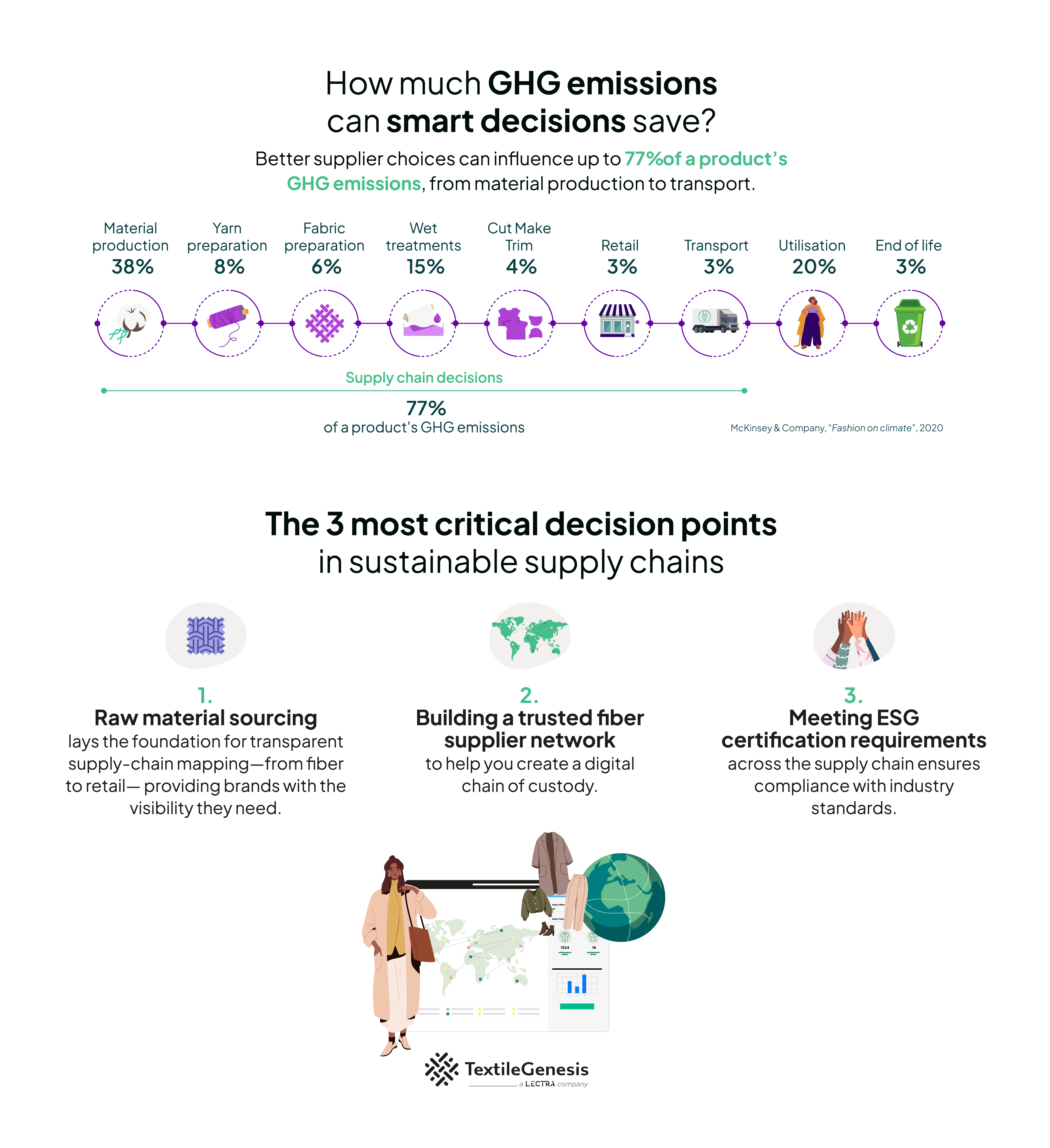
Fashion brands are under mounting pressure to meet fast-changing sustainability laws. For many, the first step is ensuring supply chain transparency to make better sourcing choices, which can influence up to 77% of a product’s GHG emissions. However, doing so requires comprehensive supply-chain tracing, that many companies have yet to accomplish.
According to some fashion supply chain statistics, only a third of the top 100 clothing companies track their supply chains, of which 95% cannot go beyond Tier 2.
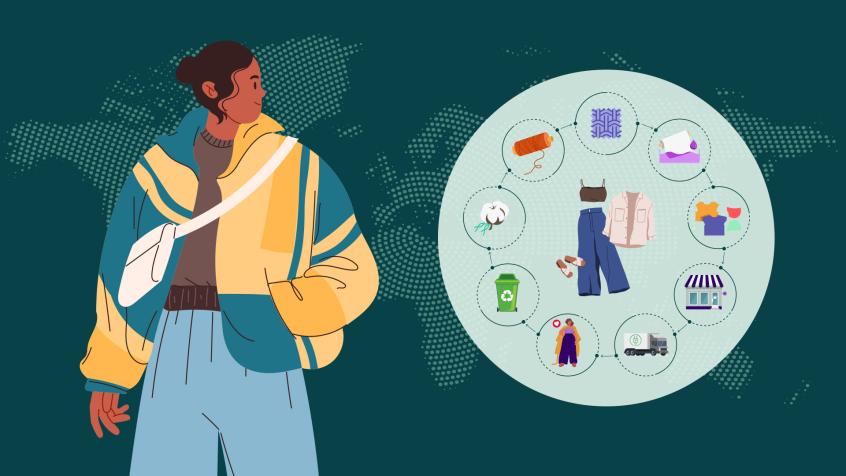
Full infographic
Three main challenges of supply chain tracing
As the figures show, many fashion brands strive for sustainability, but the effort to ensure transparency often holds them back. For supply chain tracing, three major hurdles stand in the way.
Scalability
Producing and sourcing sustainable materials at scale take time – making it difficult to meet sudden demand spikes.
Certification
Paper-based proofs expose brands to fraud risk and slow down manual processes amid evolving regulations
Change management
Transitioning to sustainable raw material sourcing entails significant change in value chain operations, workflows, and IT systems, both downstream and upstream
Raw materials, the first step towards true sustainability
Fashion companies should kickstart their transformation by prioritizing raw material production first, as a critical step toward affecting real change. Given its resource-heavy nature, material production alone accounts for a staggering 38% of product lifecycle emissions. The use of chemicals for yarn, fabric preparation, and wet treatments also contributes to water pollution, energy consumption and greenhouse gas emissions.
Material production is also labor-intensive, as it is typically managed in low-cost and remote sourcing hubs for financial and climate-related reasons. These conditions may lead to non-compliant labor practices and violation of human rights. They can also create a supply chain blind spot, as lower tier suppliers in secluded locations often undermine transparency, making it harder to ensure compliance with law and regulations.
Building supply chain transparency from the ground up
The first step is always the hardest, but Lectra makes it easier with a solution that helps customers overcome these traceability challenges through supplier engagement from the bottom up. TextileGenesis by Lectra is a cloud-based solution enabling reliable, secure digital mapping of materials from fiber to consumer with unhackable digital tokens, connecting both ends of the value chain.
- Digital tokens
Using digital tokens to track supply chain transactions, this solution prevents fraud and duplication, guiding brands toward investing in sustainable fabrics and fair sourcing practices while protecting material suppliers’ unique value and strategic positioning. - Bottom-up tracing
While most tracing technologies take a top-down approach requiring brands and top-tier suppliers to constantly solicit lower-tier ones for data, TextileGenesis proposes the opposite route, providing brands with faster access to material transaction information across lower tiers through to a documented-chain process. Material producers can enter and share information with just a few clicks, through an efficient data flow. - Rebalancing responsibility and risks
The traditional top-down declarative process of other traceability software places the burden of responsibility for lower-tier suppliers on higher-tier suppliers, creating an imbalance of power and hindering transparency across the supply chain. TextileGenesis helps brands stay up to date with the newest regulations, thanks to a customizable risk management system that can be tailored to specific business models and geographical parameters. It also distributes compliance responsibilities more evenly, as each tier's involvement can be clearly identified for every transaction in the value chain.
TextileGenesis, a gateway to Lectra’s trusted fiber supplier network
Improving sustainability isn’t just about processes, it’s about building trust at every level, from supply chain to consumers. Among other solution providers, Lectra is the only company that has formed direct partnerships with fiber producers to establish a digital chain of custody. By co-developing tools with industry experts, Lectra ensures compliance with specifications and delivers scalable data management capabilities that can handle massive volumes throughout the value chain.
The result: a digital chain of custody that empowers certification bodies to engage at every stage of the supply chain, bolstering their credibility as their involvement becomes more regular and integral, which is essential for the fundamental nature of certification organizations.
This digital chain of custody is fueled by Fibercoins, the first token-based certification developed in collaboration with major organizations within the ecosystem. These Fibercoins are only created at point of origin by the fiber producer or farm and serve to verify the point of material origin to fully eliminate double counting with a secured system. Its AI-based traceability engine, developed in consortia with key industry roles and players, verifies and validates each transaction.
TextileGenesis
How to tackle three main supply chain traceability challenges
As supply chain tracing is the first and most pivotal step toward sustainability, Lectra is committed to making this transformation as seamless and impactful as possible for its customers with TextileGenesis. With its bottom-up tracing methodology backed by digital tokens and flexible risk management system, TextileGenesis empowers customers to tackle three major traceability challenges and build a strong foundation of trust, fostering transparency across their supplier networks.
To go further
One decision at a time: Lectra’s path toward a low-carbon world
Related content