One decision at a time: Removing four key barriers to sustainable product development
As sustainability expectations rise, fashion brands face increasing pressure to reduce their environmental impact while staying competitive. Lectra’s technology helps brands eliminate these four main barriers to sustainable product development, providing them with data clarity to make better decisions for the environment.

Product development: The catalyst for sustainable fashion
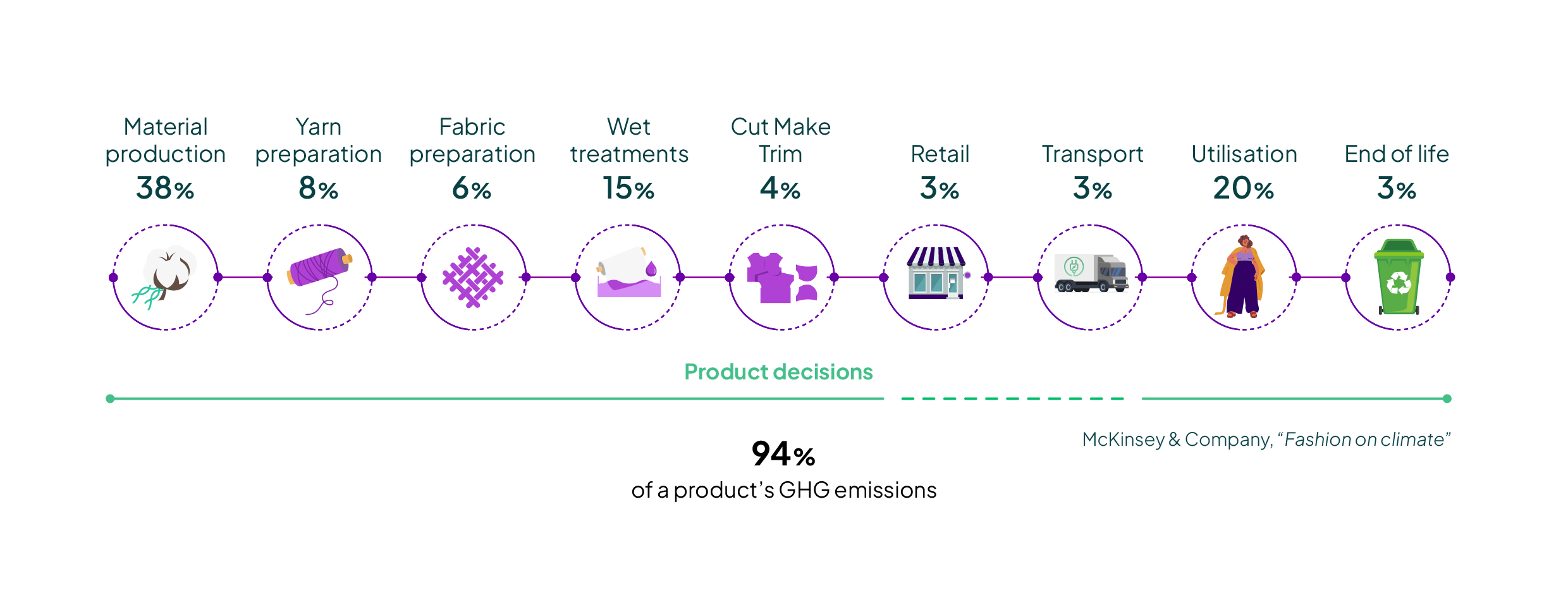
Up to 94% of a product’s environmental footprint is determined during development — long before manufacturing begins. Yet many brands still struggle with fragmented product information, limited material visibility, and unpredictable demand. These obstacles slow teams down and make sustainable decision-making more difficult.
What are the top four barriers to sustainability in product development?
1. Data silos from non-interoperable systems
Solutions designed to centralize, standardize, and manage product information often operate in isolation. Misaligned data standards, uneven data maturity, and inconsistent system setups create friction that disrupts digital workflows, reduces transparency, hinders collaboration, and weakens the reliability of sustainability‑driven decision.
2. Lack of supply chain visibility
Supply chain transparency starts with raw material sourcing — yet it’s one  of the hardest areas for brands to control. Without purpose‑built traceability solutions, teams must manually collect data from scattered supplier tiers and depend on paper documents that are difficult to validate and prone to manipulation.
3. Inaccurate demand forecasting
Cutting carbon emissions starts with cutting waste — and that means designing collections that match real demand. But when market insights aren’t integrated into creative workflows, teams lack visibility into style trends, pricing movements, assortment depth, and desirability signals. The result? Slower decisions, misaligned collections, and the overproduction that brands are desperate to avoid.
4. Exclusion of eco‑design in the early creative stages
Life Cycle Assessment (LCA) tools can reveal a product’s impact long before it’s produced. Yet they remain largely absent from daily creative workflows, meaning designers miss critical sustainability insights when making material and sourcing decisions.
The top four product development challenges — solved with Lectra
Lectra technology provides integrated product data, supplychain visibility, and environmental insights to support more responsible, eco-friendly collection development. Read our article to explore how better product development decisions can reduce waste, lower emissions, and build a more sustainable fashion future — without compromising profitability.
One decision at a time: Product decisions in focus
To go further
One decision at a time: Lectra’s path toward a low-carbon world

Related content