How can fashion brands overcome the inventory challenge?
As consumer preferences shift at increasing speed, inventory that once matched demand can become misaligned before it reaches the shelf. How can brands overcome this challenge, when inventory becomes a barrier to profitability ?
Rethinking inventory management in an era of volatility
Today’s fashion landscape is marked by unprecedented volatility, with fast and ultra-fast fashion players setting the pace for the rest of the industry. Rapidly shifting micro-trends are shortening product lifecycles and making demand increasingly difficult to predict.
The rise of omnichannel distribution has multiplied SKU complexity and strained global supply chains, turning inventory management into a reactive exercise rather than a strategic advantage.
Brands that fail to respond quickly risk:
- Carrying excess inventory
- Eroding margins
- Missing valuable revenue opportunities
In an industry defined by volatility, stock management can be the difference between profitable growth and margin erosion.
Effective stock management depends on aligned decision-making across the organization:
- Merchandisers balancing assortment depth and breadth
- Buyers optimizing order quantities
- Product managers selecting the right products based on category performance
This alignment drives higher sell-through rates, fewer markdowns, a stronger brand image
The foundation for making it happen is timely, reliable data that gives every stakeholder a shared view of performance.
Why inventory decisions miss the mark
The growing volume of textile waste in landfills is one of fashion's most pressing environmental challenges. While excessive consumption is often blamed, it is merely a symptom of a bigger issue: the industry's ongoing struggle to align supply with demand.
Shortened trend cycles, unpredictable demand, supply chain rigidity and limited market visibility make the task increasingly difficult.
As a result, inventory decisions often miss the mark, leading to:
- Excess stock and overproduction
- Missed revenue opportunities
- Unmet customer demand
- Increased waste
The underlying problem is that inventory management remains largely reactive.
Many brands make decisions based on yesterday's performance rather than today's demand.
This creates a costly imbalance: too much investment in slow-moving products, insufficient availability of high-demand items, capital tied up in inventory that fails to deliver returns.
In an era of constant change, brands need up-to-date visibility into demand and inventory to identify emerging trends, respond faster to market shifts and allocate inventory where it will have the greatest impact.
Turning inventory management into a strategic advantage with AI
In today's highly competitive landscape, merchandisers, buyers and product managers are under increasing pressure to make stock decisions that drive profitability while reducing waste.
Moving from reactive to proactive inventory management requires end-to-end market visibility, enabling teams to make confident decisions based on continuous market and competitive insights.
Leading fashion brands such as C.P. Company and Etam are already making the shift from static planning to continuous, data-driven inventory optimization.
By leveraging AI-powered market intelligence, they can:
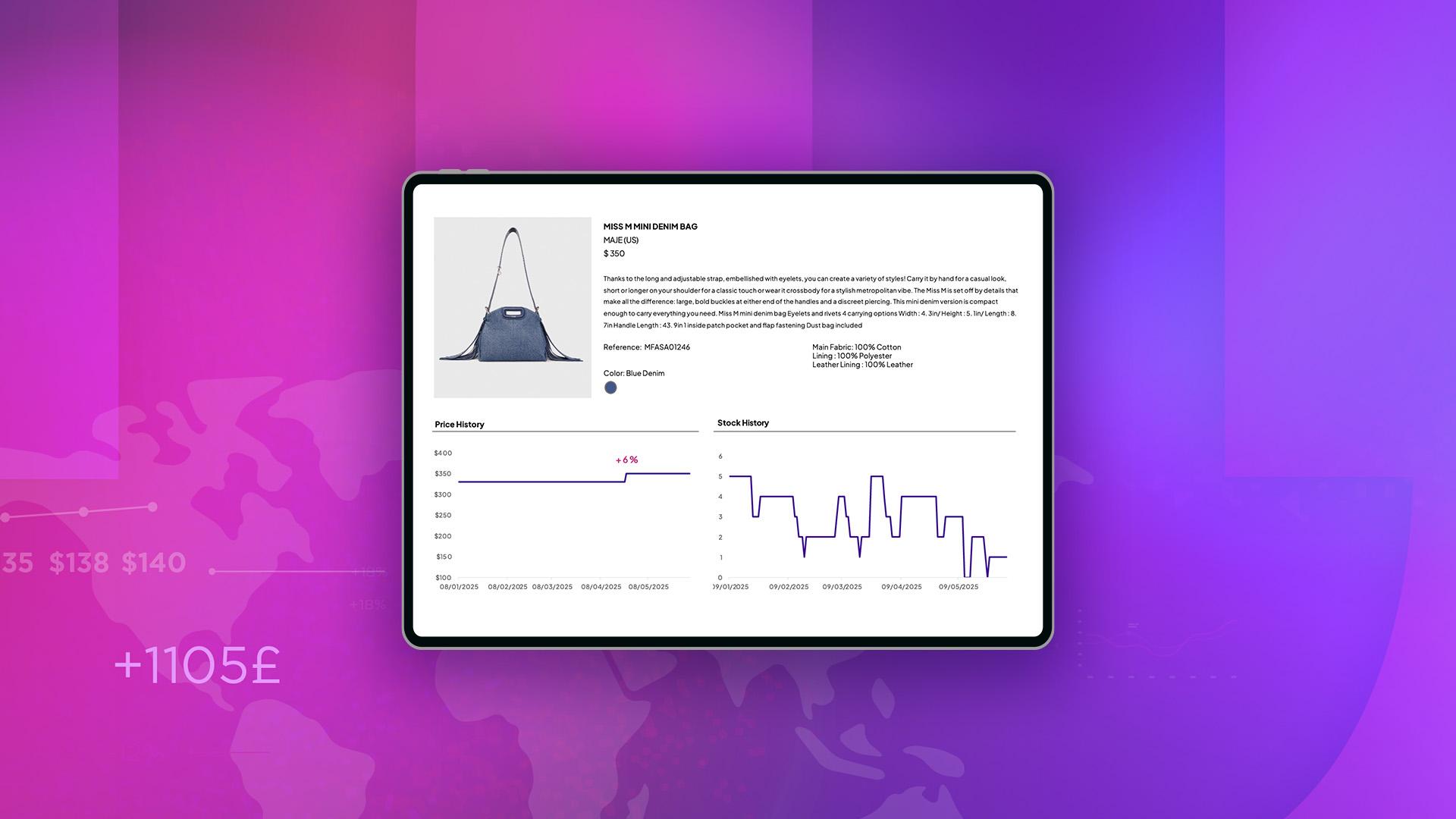
- Monitor stock levels across the market
- Track competitor assortments and discount activity
- Identify bestsellers earlier
- Spot slow-moving products sooner
This enables them to optimize inventory depth, refine category allocation, adapt pricing strategies, improve discount decisions with greater precision.

Related content